A grocery trip with ARGUS

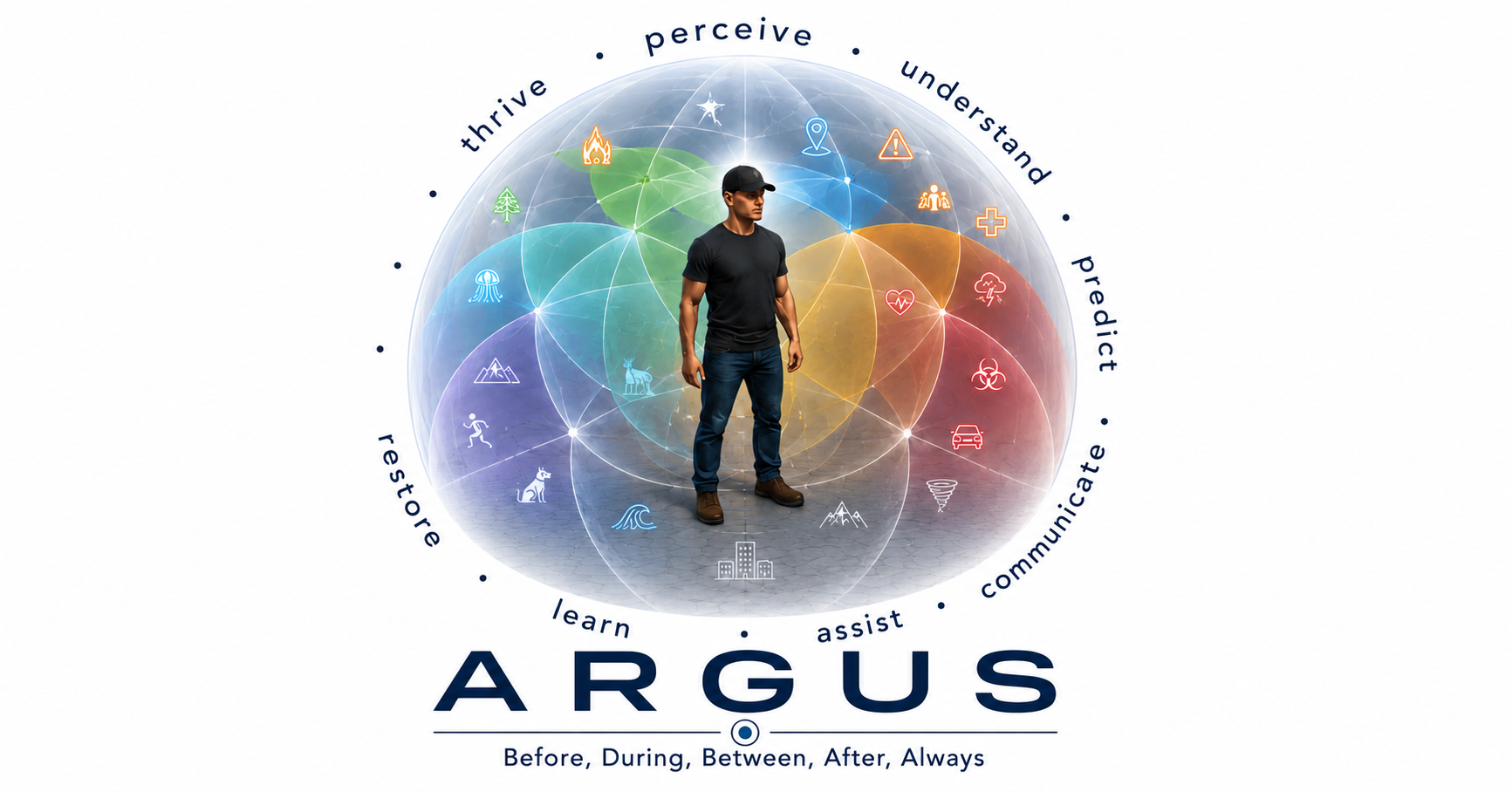
Before During After Always
An illustrative mission scenario describing proposed ARGUS assistance. This is not a report of a completed field demonstration.
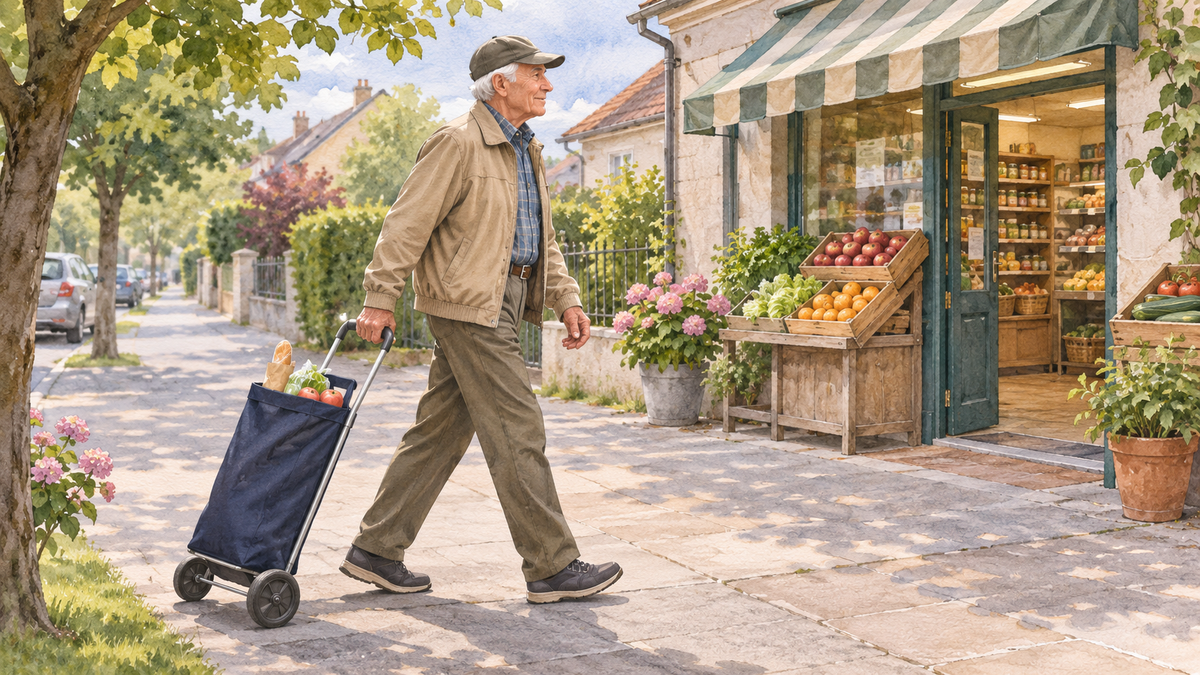
An older man checks his grocery list, takes his tall two-wheel shopping trolley, and sets off for the neighborhood store. He wants to choose his own food, enjoy the walk, and bring his purchases home. It is an ordinary expression of independence.
The complete task includes the walk, shopping, bringing the load back, getting it inside, putting food away, and having enough capacity left to recover. Each stage affects the others. A route that felt easy with an empty trolley may feel quite different on the return.
This is the kind of everyday situation I want ARGUS to help with. A Mission Package brings together preparation, relevant knowledge, equipment, decision points, and alternatives for a particular activity. Throughout, what is supposed to be gives way to what is observed at that moment for this person. The plan must remain open to correction.
Before the trip
Preparation begins with the person and what they want to accomplish today. Which groceries are needed? Which can wait? How much walking, standing, lifting, and handling feels manageable? The answer needs to include the work after checkout and after reaching home.
The trolley deserves a practical check. Its wheels, axles, frame, handle, bag, and fastenings must suit the planned load and surfaces. A manufacturer’s carrying limit is one constraint; what this person can comfortably control is another. If the trolley might need to go into a car, that matters before the trip begins.
The route also needs context. Gradients, crossings, curb access, broken pavement, and places to rest can change the effort required. Recent weather may make a familiar route less suitable. A forecast or map starts the preparation; a washed-out curb or shaded ice observed today can change the route.
With relevant information available, ARGUS could help the person review the route and useful alternatives. An uncertain condition would remain uncertain. The person’s own observations and knowledge of the neighborhood belong in that discussion.
Before departure, check the list, payment, keys, and phone and ARGUS battery charge. Consider the expected duration and how cold or frozen purchases will be carried. If a ride or help might be needed, establish availability, pickup access, cost, and whether the trolley and groceries can be accommodated.
A useful departure question is: “Does the complete trip look manageable today, including bringing everything inside and putting it away?” The person can choose a smaller purchase, a different time, or another arrangement.
During the trip
The outward journey provides information for the return. Suppose a rough section is harder to cross than expected, or the man reports that the walk has taken more effort today. Familiar distance and usual ability cannot settle what is manageable now. That experience matters when deciding how much to buy, before the return load is added.
In this proposed scenario, ARGUS would help compare those observations with the plan at useful moments, such as a rest stop or arrival at the store. The purpose is to offer relevant help without turning a familiar walk into a sequence of interruptions.
Shopping consumes effort too. Walking aisles, standing, reaching, choosing items, waiting, and transferring purchases all contribute. If a store cart is useful, there is also the practical question of where the personal trolley will go during shopping.
As purchases accumulate, the person can reconsider their weight, volume, and shape. An optional bulky item might fit in the bag but make the return substantially harder. A useful prompt could be: “Would leaving that item for another trip make the rest of today easier?”
Before checkout, compare the actual load, remaining energy, route conditions, and weather with the return options. Walking may still be a good choice. A smaller purchase, a rest, or an available ride may be preferable. Choosing a ride requires checking the fare, pickup point, trolley space, and what loading or unloading assistance is actually provided.
Suppose a much shorter route home follows a roadside of gravel, sand, and dirt. Observations of that surface indicate loose patches and stones that would make his loaded trolley harder to pull and control. ARGUS could help compare those conditions with the longer sidewalk route and how he feels now. In this example, he rejects the shortcut: saving distance would cost substantially more effort with this trolley. He chooses the paved route, subject to what he encounters there, to preserve capacity for getting the groceries inside and putting them away.
After loading, check that the groceries are secure, the wheels are clear, and the trolley remains stable and controllable. What the trolley should carry on paper is secondary to how this person can handle the actual load now.
On the way home, a delay, increasing fatigue, changing weather, or a wheel problem could reopen the decision. ARGUS is intended to help the person notice relevant changes and consider available options while there is still time to use them. Help that has not been confirmed must not be assumed available.
After reaching home
Arrival at the building still leaves a journey: entrance, elevator or stairs, hallway, door, and a place to set the groceries down. A vehicle drop-off can shorten the walk while leaving this final transfer unresolved.
The person’s remaining capacity matters here. Reaching home does not establish that he can manage the final transfer. If he reports exhaustion, or handling the load proves difficult, the plan needs to change. Smaller loads, a pause, or confirmed assistance may help. A neighbor becomes part of the plan only when their help has been requested and is available.
Refrigerated and frozen food needs appropriate storage promptly. Less urgent unpacking can wait when suitable. The person should be able to stop working, rest, and address any remaining needs.
With permission, useful lessons could be retained for another trip: a difficult crossing, a better purchase size, the time shopping really took, or an arrangement that made the return easier. Recovery remains part of the person’s ongoing life.
Always with the person
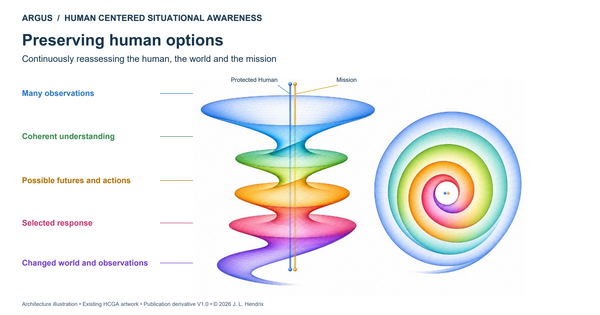
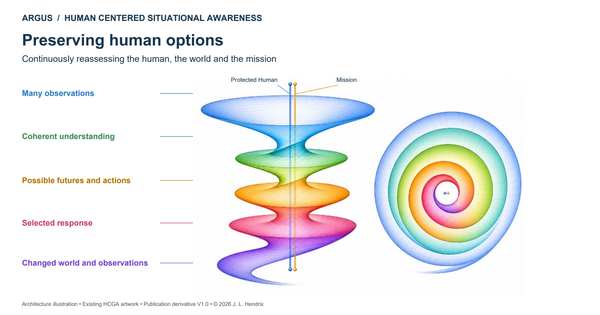
The same questions run through every phase: What is this person trying to accomplish? What do they know and prefer? What has changed? Which choices are still practical?
Age alone does not answer those questions. An older person may make this trip comfortably; someone younger may face substantial limits today. The proposed assistance should respond to the individual and the present situation, including what the person chooses to share.
Plans, prior experience, and general knowledge remain useful, but their application must answer to the present situation. Observations can be incomplete or conflicting; ARGUS should retain their source and uncertainty, include the person’s own account, and seek clarification when it matters. It should distinguish a possible resource from an available one and revise advice when its basis changes. The person remains free to change the plan or decline a suggestion.
A familiar, uneventful stretch may need no intervention. Useful assistance can include helping someone prepare, speaking briefly when a change matters, and leaving room for their own judgment.
That is what this grocery-trip example is meant to illustrate: support that stays connected to the person’s purpose through preparation, action, return, and recovery. The aim is to help people keep doing the ordinary things that make a day their own.