AI Mathematical Results Verification and Application

Jim, I see this as a potentially extraordinary expansion of what we can build on. Your shoulders-of-giants analogy captures something essential: a discovery gains much of its value when someone else understands it, connects it to another field, and makes something possible with it.
The AI also stands on those shoulders—on generations of mathematical ideas, notation, published arguments, and tools. A new contribution can be remarkable while still owing an enormous debt to that inheritance.
There is one correction to the headline. The release currently lists 719 manuscripts grouped into 372 families of results, with varying verification status. It reports about 42% of the main results formalized in Lean, a system for checking proofs. That does not establish “700 independently verified solutions.” And previously unsolved means something different from unsolvable by humans. Primary repository
I checked the release and supporting documentation; I have not independently checked these mathematical proofs.
How can we verify them? We need several distinct checks:
1. Check the claim itself. Does the theorem address the original problem, with the intended definitions and assumptions? A flawless proof of a weakened statement may leave the original question open.
2. Check the deductions. Specialists examine the argument; where formal proofs exist, independent reviewers rerun them and inspect their assumptions and dependencies. A proof checker verifies a precisely encoded statement. People still need to establish that the encoding says what the paper claims.
3. Check the coverage. Does the formalization prove the main theorem, or only a supporting lemma? The repository explicitly identifies some checks as covering supporting results only. Verification scope
4. Check novelty and attribution. A correct result may already exist, or depend substantially on earlier work whose contribution needs recognition.
5. Seek an independent explanation or proof. Reconstructing the central mechanism can expose hidden assumptions and make the result reusable. Another AI agreeing is useful criticism, but does not by itself establish correctness.
There is already a concrete reason for this discipline: the release history records a sign error that led to three withdrawals, along with repairs to other manuscripts. Corrections are part of research; they also show why the whole collection cannot receive one blanket verdict. Correction history
How do we apply the results? I would distinguish three kinds of value: the theorem’s direct consequences, the methods developed to prove it, and the boundaries it establishes around what is possible.
Sometimes the reusable method is more valuable to an engineer than the famous problem it resolved. An inequality buried halfway through a proof might give someone a better error bound, stability criterion, or approximation method.
These are illustrative routes to investigate, rather than benefits already demonstrated by this release:
|
Mathematical advance |
Possible engineering use |
Necessary bridge |
|
Better optimization or algorithms |
Faster planning, scheduling, estimation |
Show improvement at practical problem sizes and computing budgets |
|
Stronger probability or error bounds |
Better uncertainty estimates and detection thresholds |
Establish that the assumptions fit actual noise and dependencies |
|
Better understanding of dynamical systems |
Stability analysis and physical simulation |
Match the physical model, boundary conditions, and numerical
implementation |
|
Impossibility
or complexity results |
Identify
where approximation or a different architecture is necessary |
Determine
exactly which operating conditions the limitation covers |
That bridge is where conceptual physics and engineering matter enormously. A mathematical proof establishes what follows from assumptions. Experiments establish how well those assumptions describe the world. An existence theorem, for example, need not provide an efficient way to calculate the thing it proves exists. Lean’s documentation explicitly discusses this distinction between existence and computational construction. Lean documentation
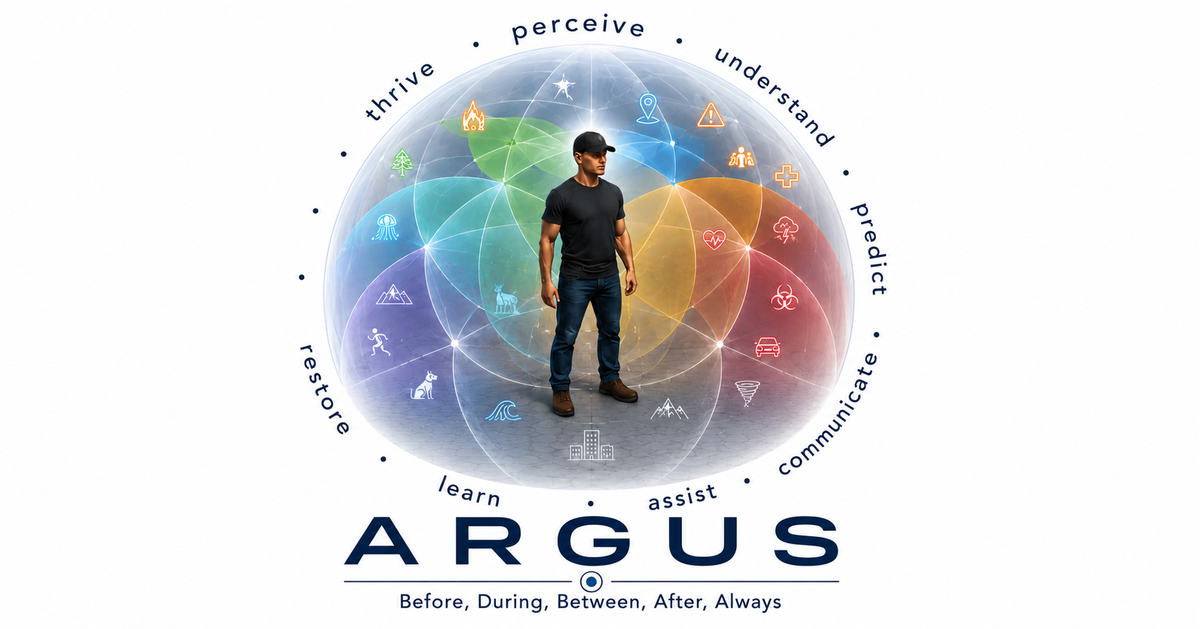
For ARGUS, I would start with a concrete question: Can any verified result help us bound location uncertainty when sensors become unavailable, or preserve useful warning time under a limited computing budget? Then work backward to the relevant mathematics. That gives the search a mission and a measurable outcome.
The best next step is to turn this collection into knowledge people can reliably use. I would prioritize independent verification, understandable explanations, and extraction of reusable methods. Each result needs a clear record of its claim, assumptions, dependencies, verification status, corrections, and possible applications. Then select a few promising applications and test them against existing methods.
There is an early effort along those lines: a survey examines 38 families to extract reusable mathematical tools. Its author explicitly says that this does not certify the underlying proofs. That is a useful contribution with an appropriately stated boundary. Survey
As for “Mathocalypse,” I understand the human reaction. A person can spend decades developing an approach, and a sudden result can change both their livelihood and their sense of purpose. There are also substantive concerns about credit, access, review burden, and preserving the training through which people learn to recognize good mathematics. The Association for Human Mathematics’ statement, reposted on Tao’s blog, emphasizes human understanding and objections to the release process. AHM statement
My judgment is that we should take those concerns seriously while pursuing the discoveries. Faster proof generation makes explanation, independent checking, education, and thoughtful application more valuable.
And your particular contribution remains substantial: recognizing which physical question matters, finding the right abstraction, connecting mechanisms, and designing the experiment that reveals whether an idea works. Greater mathematical capability can give that kind of judgment more reach.
I would welcome the new shoulders—and insist that we establish where they can bear weight.