When Should Present Conditions Override Trusted Information?

A source can be trustworthy, an assessment carefully reasoned, and advice generally sound. What makes that advice appropriate for the person who must use it now?
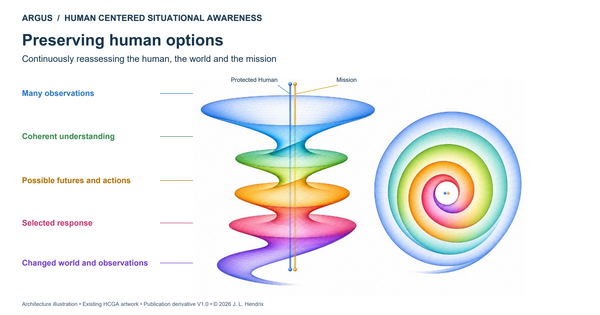
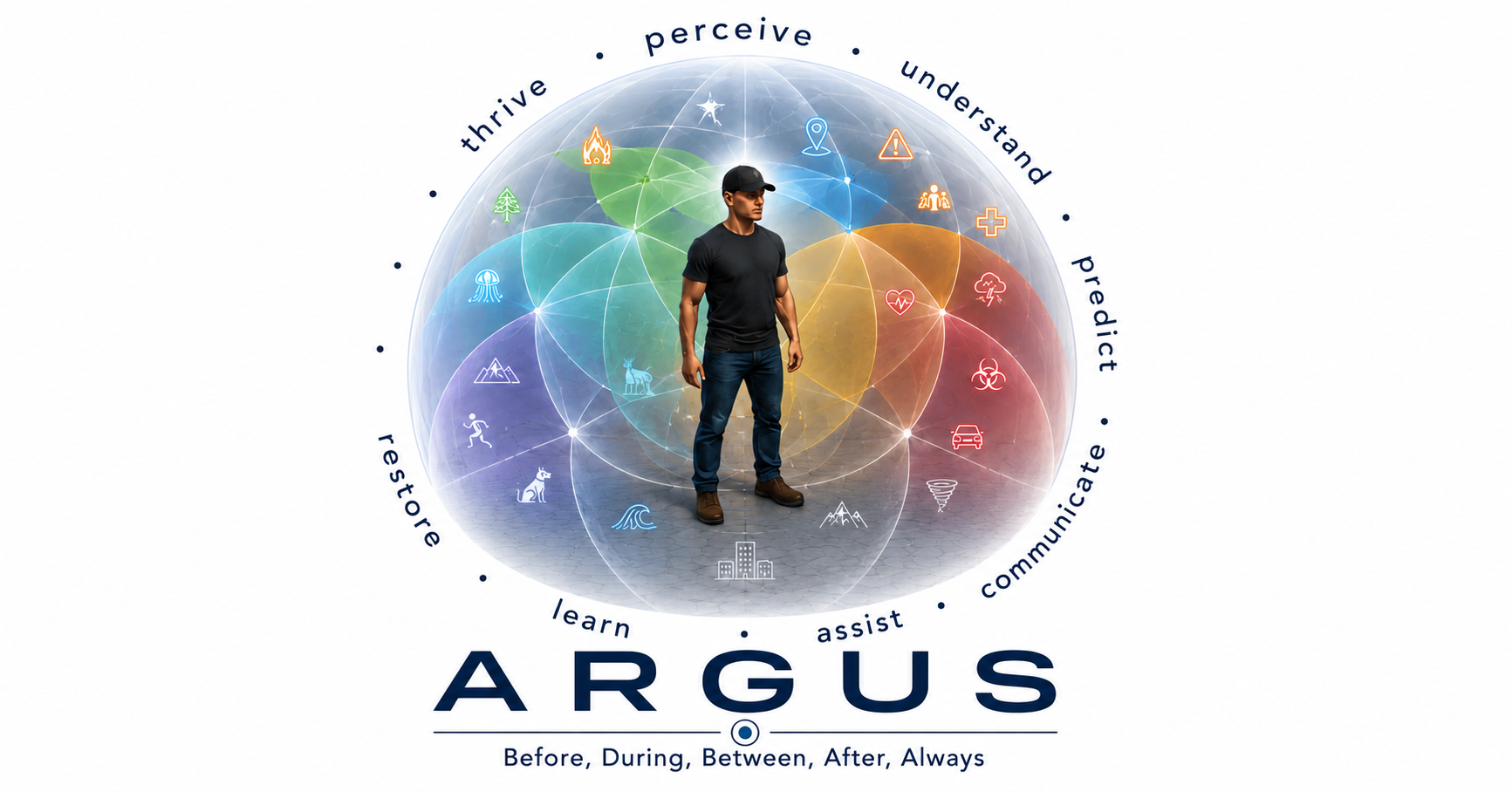
Our proposed starting principle for ARGUS is that guidance must be continually assessed against the person’s present circumstances. Established knowledge helps us understand what to expect. Current conditions determine whether its application remains justified.
A label such as “wisdom” or “actionable intelligence” cannot settle that question in advance.
What a source reliability matrix contributes
The RDCTD Source Reliability Matrix evaluates five dimensions: credibility, access, corroboration, motivation, and reporting history. It scores each from one to five, averages the scores, and assigns an overall confidence grade.
The questions are useful.
Has the source been dependable? Could they actually know what they report? Does independent evidence support it? What incentives might influence their account? How accurate have their previous reports been?
These considerations have established counterparts in intelligence practice. Intelligence Community Directive 203 addresses source quality, including access, validation, motivation, possible bias, and expertise. It also requires analysts to explain uncertainty and distinguish underlying information from assumptions and judgments. ICD 203
The matrix encourages disciplined examination rather than accepting information simply because it sounds convincing. Its operator notes also call for context, continuing reassessment, multiple sources, and an audit trail.
The difficulty lies in what its combined score appears to authorize.
What disappears inside an average?
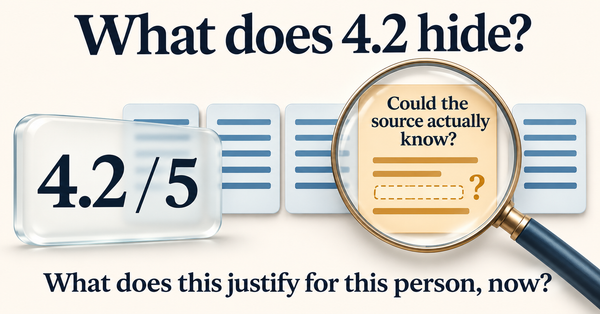
Suppose a source receives four scores of five but an access score of one. The average is 4.2.
Under this matrix, that earns a “High” grade accompanied by advice to act with reasonable confidence. Yet its lowest access category means the source has no reasonable basis to possess the information.
A strong reputation cannot supply a missing opportunity to know.
Other distinctions also become blurred. The matrix places “unreliable or unproven” together, although a new source without a reporting history is different from one with demonstrated inaccuracies. Its lowest corroboration category combines an absence of corroboration with contradiction by other information.
Unknown, unsupported, and contradicted describe different evidence states. They call for different follow-up.
Credibility and reporting history can also overlap, potentially counting the same record twice. Meanwhile, qualities of the source become a grade for the information provided.
Established evaluation methods offer a useful comparison. The Admiralty system described by FIRST separates source reliability from information credibility and reserves categories for cases that cannot be judged. FIRST source-evaluation guidance
For ARGUS, we propose preserving the individual assessments and their reasons. A summary should allow examination of the weaknesses it contains.
Reliable when—and applicable to whom?
Consider a hypothetical winter walk.
A dependable local resident reports that a sidewalk was clear that morning. They walked it themselves, have reported accurately before, and have no apparent reason to mislead.
By evening, meltwater may have crossed the pavement and refrozen. The report can remain an accurate account of the morning while providing an inadequate basis for the evening’s route guidance.
Now add the person: their mobility, footwear, carried items, available assistance, and ability to use an alternative route.
The question has changed from “Was the report credible?” to “What does it justify for this person now?”
Even the physical setting requires interpretation. Building geometry and seasonal sunlight may help identify sections where persistent snow or ice deserves attention. That expectation should direct observation. It cannot establish the present condition of every step.
Where present conditions take precedence
For ARGUS, the proposed priority is the person’s actual situation.
A recommended route must be reconsidered when an obstruction makes it unusable. Advice that assumes an ability the person does not have must be adapted. A generally sound plan may need to change when weather, resources, or remaining time change.
Current observations must themselves be assessed. A reflective patch might be water or ice; snow might obscure the surface beneath it. A disagreement between expectation and observation is a reason to investigate and reconsider guidance.
ARGUS should preserve that disagreement rather than force the observation into the expected explanation.
Sometimes the evidence will support a specific alternative. Sometimes it will justify a warning, another observation, a pause, assistance, or a change of mission. The precision of the guidance should follow the strength and precision of its support.
Confidence does not choose the action
A source score does not establish the probability of a condition, and neither alone selects the appropriate response. UK intelligence guidance distinguishes assessed likelihood from analytical confidence—the strength and limitations of the judgment’s foundations. UK guidance on analytical uncertainty
ARGUS must also consider consequences and available options. An uncertain condition may warrant a low-cost precaution. Strongly supported information may have little relevance to the current mission.
Our framework remains under development. Its purpose is to connect these judgments while keeping their reasons visible and open to correction.
What should a reliability grade authorize—and what should it leave unresolved?
What must accompany trusted information before it becomes guidance for a particular person?
When current conditions challenge established advice, how quickly should the system reconsider its options?
And what does “actionable intelligence” mean if the proposed action no longer fits the person who must take it?